
Tooling should speed you up—not ask you to paste production payloads into a dozen random websites.
ToolGrid is my answer: a native, offline-by-default developer toolbox built with Rust + Freya, designed to be fast, private, and frictionless.
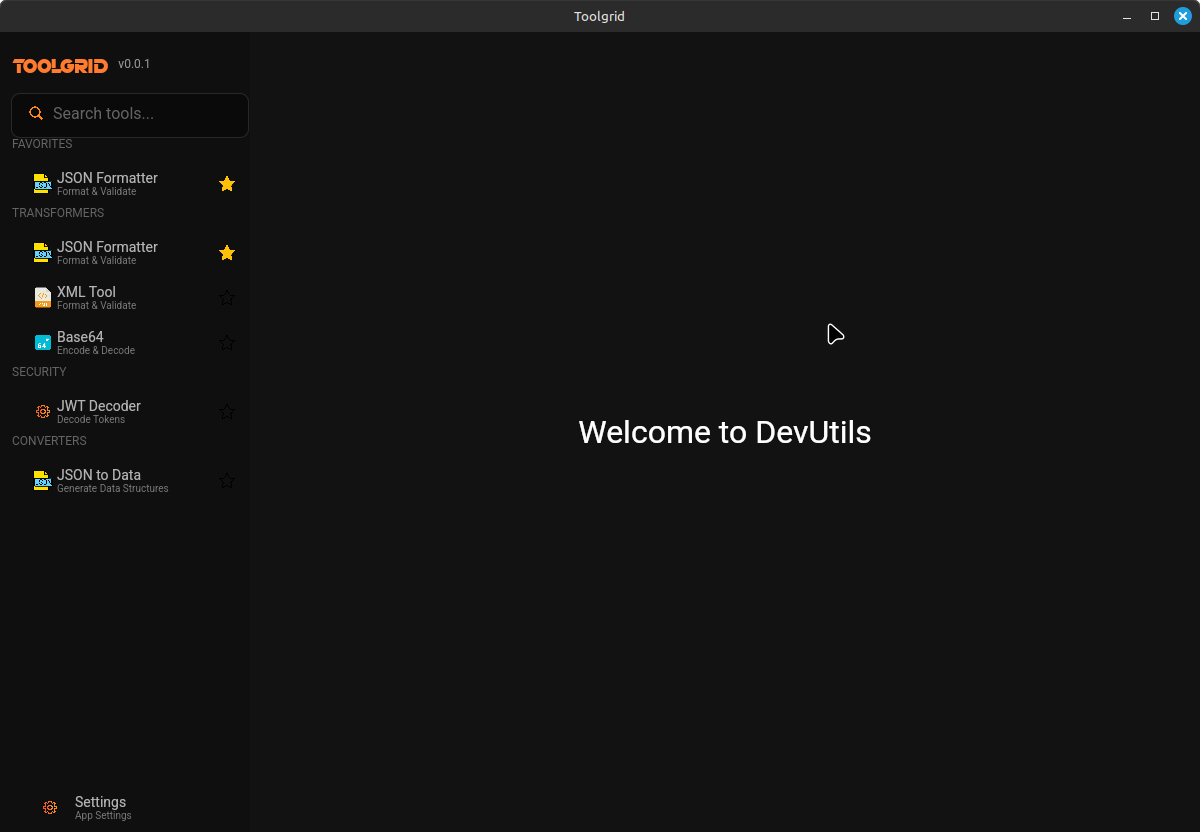
One toolbox. Zero tab-hopping. Totally local.
Why I built it
Modern desktop apps are often built with Electron and web technologies. That’s not inherently bad—Electron is productive, cross-platform, and it ships.
But for developer utilities, the trade-off can feel brutal: you open a tiny tool and end up paying for a whole browser stack. Fans spin up, RAM usage creeps, and “quick” becomes heavy.
I was fed up with that.
So I built ToolGrid to be native-first with Rust + Freya—optimized for:
- Instant startup (it should be there when you need it)
- A smaller memory footprint than typical web-wrapped desktop apps
- Offline-by-default safety, so sensitive payloads stay local
Every engineer has the same loop:
- Format JSON
- Decode a JWT
- Convert JSON into structs/classes
- Base64 encode/decode
Most of the time, the quickest option is a browser tab. And that’s exactly the problem: browser utilities are convenient, but they’re also noisy, slow, and often unsafe for sensitive data.
ToolGrid keeps your payloads where they belong: on your machine.
What’s inside (today)
ToolGrid focuses on the “daily drivers”:
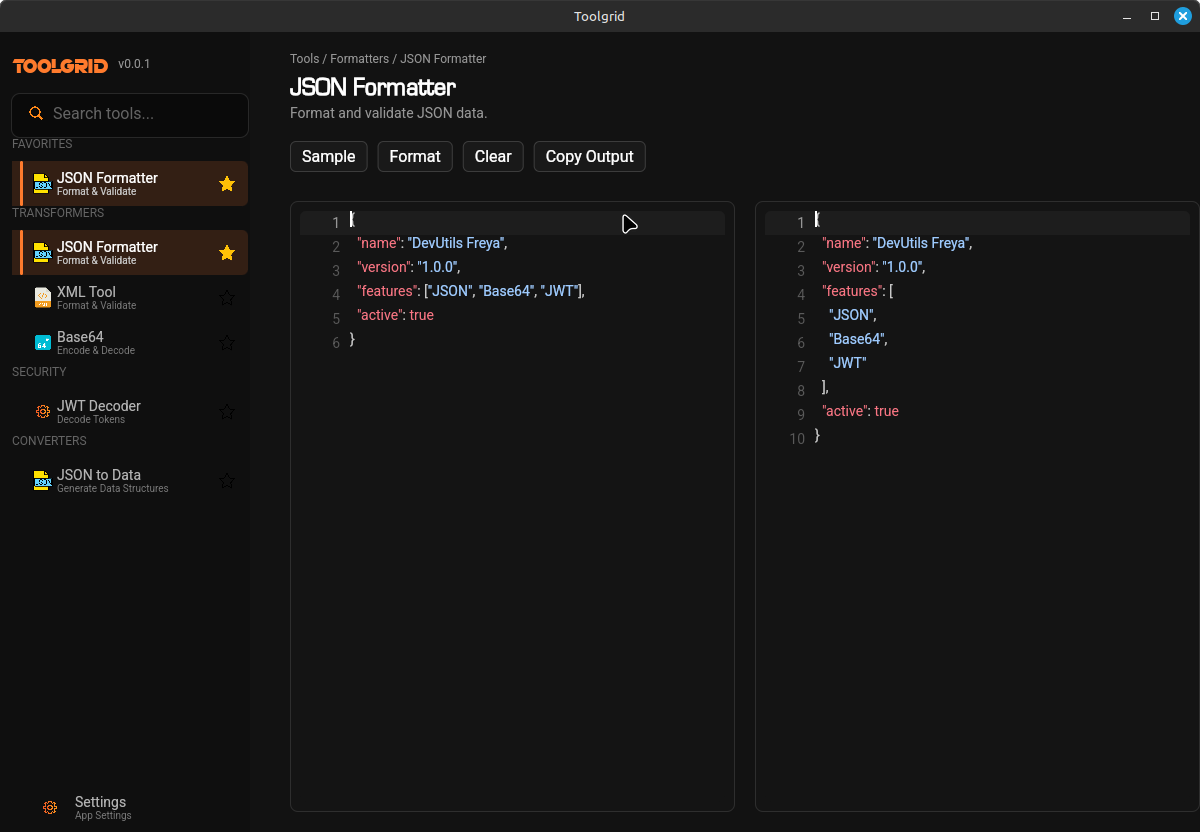
- JSON Formatter — readable output, instant feedback
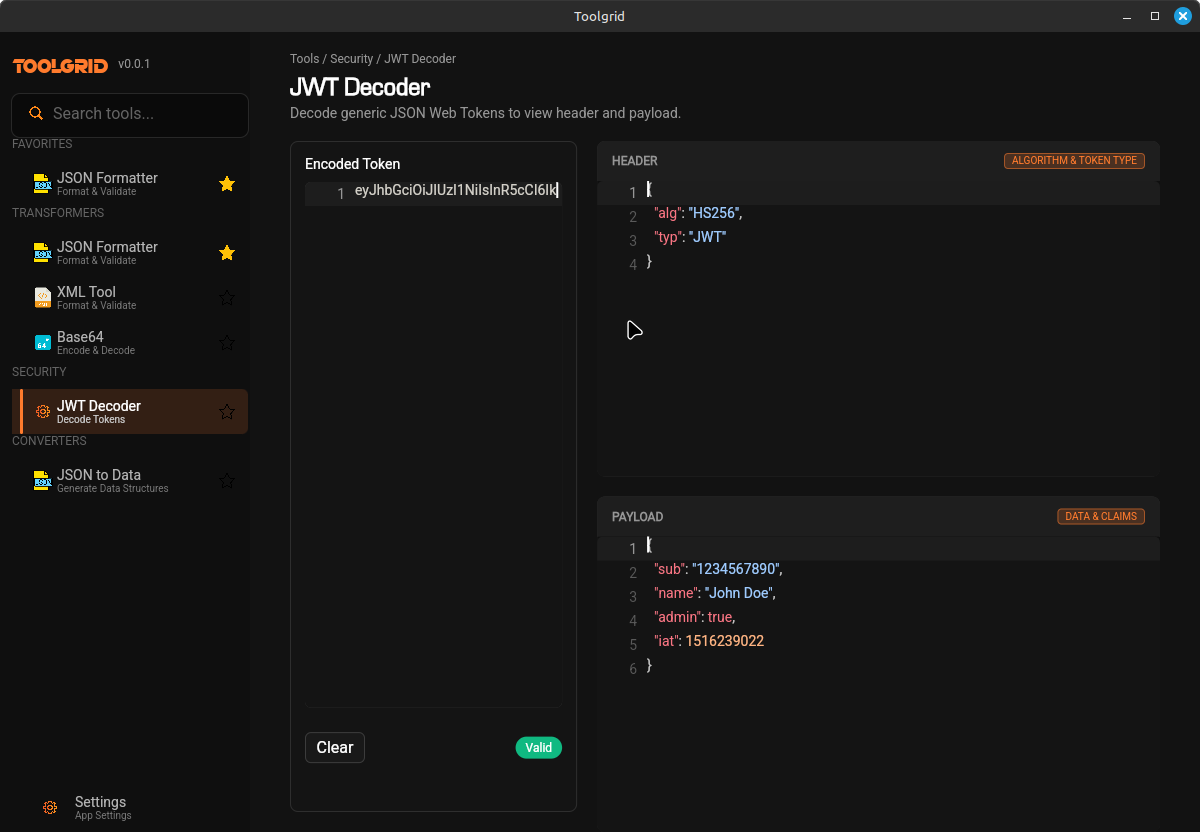
- JWT Decoder — inspect claims locally without risking leaks
- JSON → Data Structures — generate types/structs from payloads
- Base64 Encoder/Decoder — quick transforms for debugging and testing
I’m keeping the core promise simple: open → search → run the tool → copy the result.

What “Early Access” means
ToolGrid is shipping in Early Access while I harden the experience:
- smoothing UI/UX polish
- expanding the tool set (without turning it into bloat)
- improving ergonomics for real workflows
If you try it and something feels off, that feedback is gold.
Try ToolGrid
Technical Deep Dive: Packaging Rust GUI Apps
Ever wonder how I actually bundle a sophisticated Rust GUI like ToolGrid for Windows and Linux? It isn’t as simple as cargo build.
If you want to know the “under the hood” details of my packaging journey—from WiX installer nightmares to Flatpak manifests—head over here.
What’s next
I’m building toward a toolbox that’s:
- fast to open
- fast to search
- safe by default
If your team needs custom internal utilities or a privacy-first workflow, I also do services.